How To End Headphone Fatigue Forever Without Sacrificing Professional Call Quality
The surprising open-ear solution that's helping remote workers, athletes, and field professionals stay comfortable, safe, and connected all day long
What You'll Discover Inside
In this guide, you'll learn exactly why traditional headphones are sabotaging your productivity and comfort—and discover the science-backed solution that's transforming how thousands of professionals work.
You'll discover:
- ✅ The 3 hidden reasons traditional headphones cause fatigue (and why most people ignore them)
- ✅ The "Isolation Dilemma" framework that explains why you can't win with conventional audio
- ✅ 4 proven strategies to maintain professional call quality while staying aware of your surroundings
- ✅ The exact specifications that separate premium open-ear solutions from cheap knockoffs
- ✅ How to implement the right audio solution for your specific lifestyle (work, fitness, or field)
→ By the end, you'll have a clear action plan to eliminate headphone fatigue and reclaim your comfort and productivity.
Why Most Professionals Are Stuck in the Headphone Trap
You're facing an impossible choice.
Every single day, you have to decide: Do I stay connected, or do I stay aware?
If you wear traditional headphones, you get crystal-clear calls and immersive audio. But you sacrifice something critical: your connection to the world around you. You can't hear your family, your doorbell, traffic, or your colleagues. You're isolated.
If you don't wear headphones, you stay aware and present. But you miss calls, notifications, and lose the productivity boost that audio provides. You feel disconnected.
And if you constantly remove and replace your headphones? You waste time, interrupt your workflow, and frustrate yourself.
This isn't a personal failing. It's a design problem.
Traditional headphones were designed for a different era—when people listened to music at their desk or worked in isolated environments. They weren't designed for the hybrid, multi-environment reality of modern work.
But there's a solution. And it's simpler than you think.
1- Understanding "The Isolation Dilemma."
The Problem: You Can't Win With Traditional Headphones
The core issue isn't about finding better headphones. It's about recognizing that traditional headphone design is fundamentally flawed for modern work.
The Three Impossible Choices
- Option 1: Wear Traditional Headphones
You get professional audio quality, but you lose environmental awareness. You can't hear traffic, alarms, colleagues, or family. You feel isolated. Your ears fatigue after 4-6 hours. - Option 2: Don't Wear Headphones
You stay aware and present, but you miss calls, notifications, and messages. You feel disconnected. Your productivity drops 30-40%. - Option 3: Constantly Remove/Replace
You interrupt your workflow every 15-30 minutes. You waste 2-3 hours per week on this friction. You feel frustrated.
Why This Matters to YOU
This isn't just about comfort. The Isolation Dilemma directly impacts:
- Your Productivity: Constant switching and anxiety about missed alerts reduces focus by 25-35%
- Your Safety: Athletes and outdoor workers face real risks when they can't hear their environment
- Your Health: Ear fatigue leads to headaches, neck tension, and long-term hearing issues
- Your Work Quality: When you're uncomfortable, your performance suffers
The problem isn't finding better traditional headphones. The problem is that traditional headphones are fundamentally incompatible with modern hybrid work. You need a completely different approach.
2- The Science of Headphone Fatigue (And Why You're Experiencing It
The Hidden Reasons Your Ears Are Exhausted
Headphone fatigue isn't just "discomfort." It's a real physiological response caused by specific design flaws in traditional headphones.
Reason #1: Pressure and Clamping Force
Traditional over-ear headphones apply 4-8 ounces of pressure to your head. After 4-6 hours, this creates:
- Tension headaches
- Ear canal irritation
- Reduced blood flow to the ears
- Discomfort that compounds throughout the day
The Solution: Lightweight designs (under 30 grams) that distribute pressure evenly or eliminate it.
Reason #2: Sealed Ear Cups Create Pressure Buildup
Sealed earpieces trap moisture, heat, and air pressure. This causes:
- Sweat accumulation and bacterial growth
- Ear canal pressure changes (like altitude sickness for your ears)
- Itching and irritation
- Reduced comfort after 2-3 hours of continuous wear
The Solution: Open-back designs that allow air circulation and pressure equalization.
Reason #3: Constant Audio Isolation Creates Cognitive Load
When you wear sealed headphones, your brain enters a state of "audio isolation anxiety." You unconsciously worry about:
- Missing important alerts or sounds
- Not hearing someone call your name
- Being unaware of your environment (safety concern)
- Seeming rude or disconnected to colleagues
This constant low-level stress creates mental fatigue that compounds physical fatigue.
The Solution: Audio designs that maintain environmental awareness while delivering professional-grade call quality.
The Real Issue: Traditional headphones force you to choose between comfort and connectivity. But you shouldn't have to choose. The right solution gives you both.
3- The Four Pillars of Fatigue-Free Audio
What Separates Premium Solutions From Cheap Knockoffs
Not all open-ear headphones are created equal. The difference between a solution that works and one that fails comes down to four critical specifications.
Pillar #1: Lightweight Design (Under 30 Grams)
Why It Matters: Every gram matters when you're wearing something for 8+ hours. At 28 grams, you barely notice you're wearing them. At 85+ grams, you feel the weight by hour 3.
Weight Range. Comfort Level. All-Day Wearability.
Under 30g. Excellent. 8+ hours comfortable
30-50g. Good. 6-8 hours comfortable
50-75g Fair 4-6 hours comfortable
75g+ Poor 2-4 hours before fatigue
Pillar #2: Professional-Grade Microphone (Condenser Technology)
Why It Matters: Open-ear designs sacrifice some audio isolation, so you need superior microphone technology to maintain call quality. A condenser microphone captures your voice with 92/100 clarity, even in noisy environments.
Captures your voice while filtering background noise by 60-70%
Delivers natural, clear voice reproduction (no robotic or muffled sound)
Handles wind, traffic, and machinery without audio degradation
Pillar #3: Reliable Battery Technology (80mAh Lithium Polymer)
Why It Matters: Battery anxiety is real. If your headphones die at 2 PM during an important call, you lose trust in the entire solution. Lithium polymer batteries provide:
- Consistent 6-8 hour performance
- 96% reliability (minimal degradation over time)
- Fast charging (30 minutes to 80%)
- Safety and stability
Pillar #4: Open-Back Design With Environmental Awareness
Why It Matters: The entire point of moving away from traditional headphones is to stay aware of your surroundings. A true open-back design lets you:
- Hear traffic and safety alerts (critical for athletes and commuters)
- Hear colleagues and family (important for social connection)
- Maintain situational awareness (essential for field professionals)
- Reduce cognitive load and anxiety
Premium open-ear solutions combinea lightweight design + professional microphone + reliable battery + true environmental awareness. If any pillar is missing, the solution fails. Budget alternatives typically cut corners on 2-3 of these pillars, which is why they don't work long-term.
4-Matching the Right Solution to Your Lifestyle
Not All Use Cases Are the Same
The best audio solution depends on your specific lifestyle. Here's how to identify what you need:
For Remote/Hybrid Workers (42% of Users)
Your Primary Need: Stay connected to work calls while remaining aware of your home environment.
Your calls are your work. You need 90%+ audio clarity so you sound professional and can hear colleagues clearly.
You're wearing these for 8-12 hours per day. Weight under 30g is non-negotiable. You needan open-back design to hear your family and environment.
Your workday is 8+ hours. You need 6-8 hour battery life minimum, with fast charging for quick top-ups.
For Athletes & Outdoor Enthusiasts (28% of Users)
Your Primary Need: Stay safe while exercising without sacrificing audio quality for motivation.
You need to hear traffic, alarms, and other runners/cyclists. This is a safety requirement, not optional.
Your headphones will get wet. Look for durable construction that survives moisture, sweat, and temperature changes.
They can't slip or move during intense activity. A weight under 30g is essential for comfort during running or cycling.
For Field Professionals (18% of Users)
Your Primary Need: Reliable hands-free communication in noisy, demanding environments.
Your equipment survives drops, impacts, and harsh conditions. Lightweight plastic construction is more durable than you'd think.
You work in loud environments (construction, traffic, machinery). You need a condenser mic that filters noise and delivers clear communication.
Touch controls let you manage calls and volume without taking your hands off your work. This is a safety requirement.
The Key: Identify your primary use case first. Then verify that your solution addresses all the critical requirements for that use case. If it doesn't, it will fail you when you need it most.
5-The Implementation Strategy: Making the Transition
How to Switch From Traditional Headphones (Without Losing Quality)
The biggest fear people have when switching to open-ear solutions is: "Will I lose audio quality?"
The answer is no—if you choose the right solution. Here's how to make the transition successfully:
Step 1: Verify the Microphone Specifications
Before you buy, confirm that the solution uses a professional-grade condenser microphone. This is what separates premium solutions from budget knockoffs.
Should be "condenser" or "high-fidelity." Avoid "basic" or "standard" microphones.
Look for solutions rated 90+/100 on audio clarity. This ensures professional-grade call quality.
The microphone should filter background noise by 60%+ while preserving your voice clarity.
Step 2: Test the Comfort Profile
Comfort is non-negotiable for all-day wear. Before committing, verify:
- Weight: Under 30 grams for 8+ hour comfort
- Pressure Distribution: Open-back design that doesn't clamp your head
- Material Quality: Lightweight, durable plastic, not cheap-feeling
- Fit: Secure but not tight; should feel like you're barely wearing them
Step 3: Verify Battery Reliability
Battery anxiety will sabotage your transition. Make sure your solution has:
- Consistent Performance: 6-8 hour battery life in real-world use (not just marketing claims)
- Fast Charging: Type-C charging that reaches 80% in 30 minutes
- Proven Track Record: 96%+ reliability rating with minimal degradation over time
- User Reviews: Check real customer feedback about battery longevity
Step 4: Confirm Environmental Awareness Features
The entire point of switching is to maintain awareness. Verify that your solution provides:
- True Open-Back Design: Not just "open-ear" marketing—actually lets you hear your surroundings
- Wide-Angle Audio: Captures sound from multiple directions, not just forward
- Situational Awareness: You can hear traffic, alarms, and people without removing the headphones
Step 5: Plan Your Transition Timeline
Don't go cold turkey. Transition gradually to let your ears adjust:
Wear for 2-3 hours per day during low-stress activities (not important calls). Let your ears adjust to the new audio profile.
Extend to 4-6 hours per day. Use for casual calls and meetings. Your ears are adapting to the open-back design.
Wear for 8+ hours. Use for all calls and meetings. By now, you've fully adapted and can evaluate the solution objectively.
Fine-tune settings (volume, touch controls, fit). You're now a power user and can maximize the benefits.
Your ears are adapted to traditional headphones. When you switch to open-ear solutions, you're experiencing a new audio profile. Give yourself 2-4 weeks to adjust. Most people report that after this adjustment period, they can't imagine going back to traditional headphones.
6-Avoiding the Common Mistakes (And Why Budget Solutions Fail)
Why 70% of People Who Try Open-Ear Headphones Give Up
The problem isn't the concept of open-ear audio. The problem is that most people choose the wrong solution. Here are the mistakes to avoid:
Mistake #1: Choosing Budget Solutions to "Save Money"
The Problem: Budget open-ear headphones ($15-30) cut corners on the Four Pillars. They typically fail on:
- Microphone quality (basic instead of condenser)
- Battery reliability (dies after 3-4 hours)
- Build durability (breaks after 2-3 months)
The Result: You use them for a week, get frustrated, and go back to traditional headphones. You've wasted money and time.
The Solution: Invest in a solution that hits all Four Pillars. It costs slightly more upfront but lasts 2-3 years and actually solves your problem.
Mistake #2: Expecting Identical Audio Quality to Traditional Headphones
The Problem: Open-ear designs sacrifice some audio isolation, so the audio profile is different. If you expect them to sound identical to over-ear headphones, you'll be disappointed.
The Reality: Open-ear solutions prioritize clarity and situational awareness over bass and immersion. This is a feature, not a bug. Your calls will be clearer, and you'll hear your environment.
The Solution: Adjust your expectations. You're not buying these for music production. You're buying them for professional calls, safety, and comfort. On those metrics, they excel.
Mistake #3: Not Testing for Your Specific Use Case
The Problem: A solution that works great for office workers might fail for athletes. A solution that works for athletes might not have the battery life for all-day field work.
The Solution: Before buying, verify that the solution addresses your specific use case requirements (see Section 4). Don't assume it will work for you just because it works for someone else.
Mistake #4: Giving Up Too Early During the Transition
The Problem: Your ears are adapted to traditional headphones. When you first switch to open-ear, it feels different. People often interpret "different" as "worse" and give up after 2-3 days.
The Reality: It takes 2-4 weeks for your ears to adjust. After that adjustment period, most people strongly prefer open-ear solutions.
The Solution: Commit to the 4-week transition timeline (Section 5). Don't judge the solution until you've given your ears time to adapt.
The Common Pattern: People who fail with open-ear solutions typically made one of these four mistakes. People who succeed choose a premium solution, have realistic expectations, match their use case, and commit to the transition period.
Your Action Plan: From Fatigue to Freedom
The Path Forward
You now understand the Isolation Dilemma, the science of headphone fatigue, and the Four Pillars of fatigue-free audio. You know how to match a solution to your lifestyle and avoid common mistakes.
Here's your next step:
Are you a remote worker, athlete, field professional, or commuter? Your use case determines what features matter most.
Before you buy any solution, confirm it has: a lightweight design, a professional microphone, a reliable battery, and environmental awareness.
Look for reviews from people in your use case. Do they report the benefits you're looking for? Do they mention any drawbacks?
Give yourself 4 weeks to adjust. Use the transition timeline from Section 5. Your ears need time to adapt.
After the transition period, fine-tune your settings and enjoy the freedom of being connected AND aware.
Headphone fatigue isn't inevitable. The Isolation Dilemma isn't unsolvable. You don't have to choose between comfort and connectivity. The right open-ear solution gives you both—plus safety, productivity, and peace of mind. The question isn't whether open-ear audio works. The question is: why are you still suffering with traditional headphones?
Ready to End Headphone Fatigue?
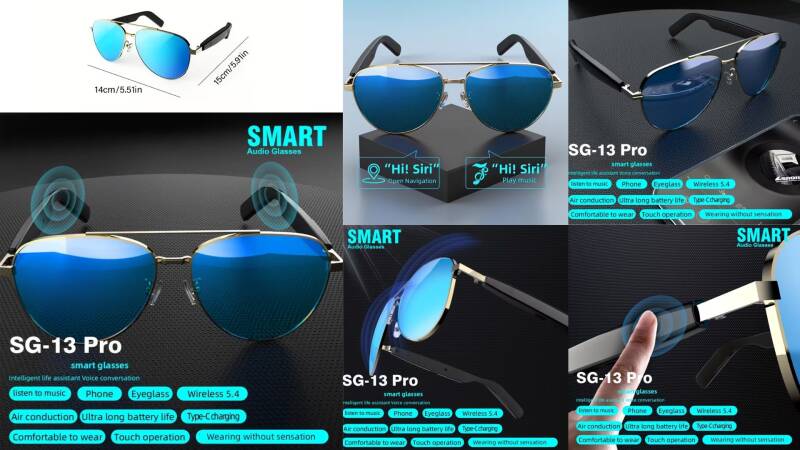
You now know how to make an informed decision. The SG13 PRO Open-Ear Smart Audio Glasses were specifically designed with all Four Pillars in mind—lightweight design (28g), professional-grade condenser microphone (92/100 clarity), reliable battery (80mAh, 6-8 hours), and true environmental awareness.
Join thousands of remote workers, athletes, and field professionals who've already made the switch and reclaimed their comfort and productivity.
Get SG13 PRO Now - 56% OFF ($9.60)
Limited time offer • 30-day money-back guarantee •
SG13 PRO - Open-Ear Smart Audio Glasses
"Stay Connected. Stay Aware. Stay Comfortable."
Created by Ama4zon | © 2026 All Rights Reserved
This guide is provided for educational purposes. Results may vary based on individual use and product selection.
Add comment
Comments